

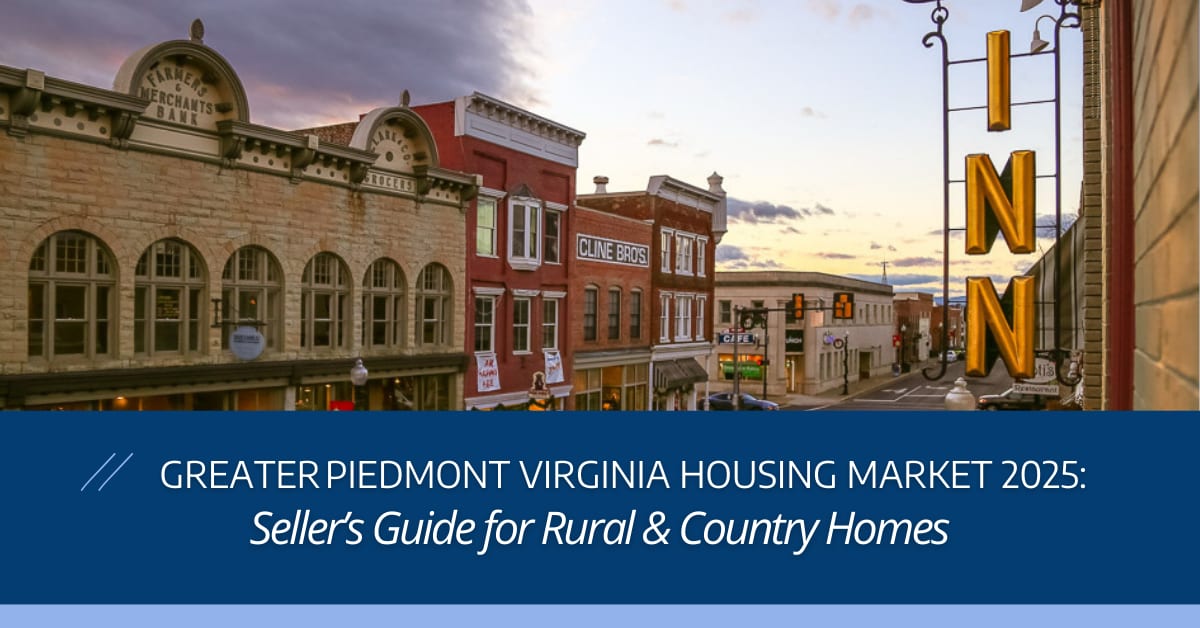

Selling a rural home, country estate, horse farm, or acreage property in Virginia’s Greater Piedmont requires a different strategy than selling a typical suburban house.
I’m Karen M. Souder, Principal Broker of The Real Estate Store. My brokerage focuses exclusively on sellers throughout Culpeper, Warrenton, Gainesville, Madison, Orange, Locust Grove, Fredericksburg, and surrounding communities.
The 2026 market remains favorable for many Virginia property owners, but it has changed. More homes are coming onto the market, buyers are taking longer to make decisions in several local counties, and pricing mistakes can become more expensive.
For owners of rural homes and specialty properties, that makes accurate pricing, preparation, documentation, photography, and negotiation more important than simply getting a property onto the MLS.
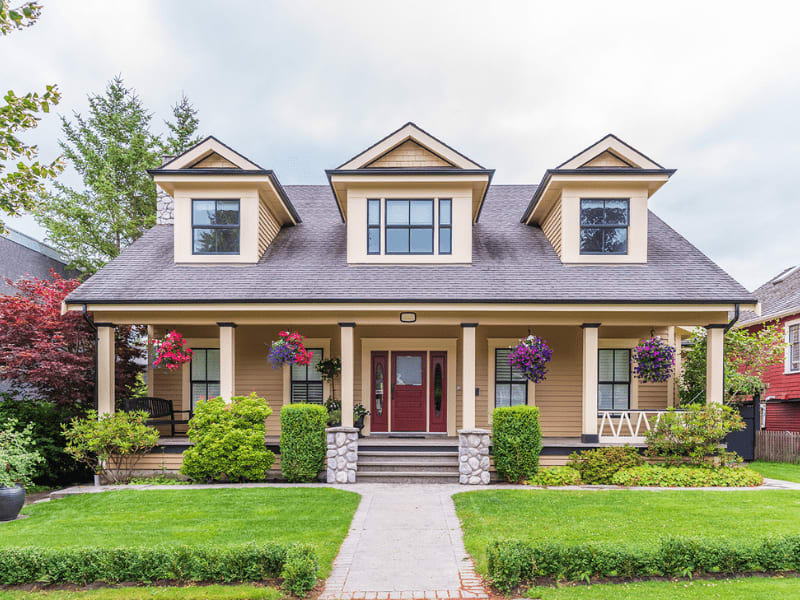
And it's more than just the numbers. Life in the Greater Piedmont region offers what city living simply can't match: crisp mountain air, panoramic pastures, winding scenic drives, and that rare balance between solitude and community. Imagine your next chapter nestled near the Blue Ridge, where you can still enjoy farmers markets, trail rides, vineyard weekends, and historic main streets just minutes from your front door.
Greater Piedmont Virginia Housing Market: Fall 2026
Virginia home prices continued to rise during the summer of 2026, while available inventory also increased.
According to the August 2026 Virginia Home Sales Report from Virginia REALTORS®, the statewide median sold price reached approximately $449,000, up 4.4% from August 2025.
At the same time, Virginia had approximately 28,560 active listings, representing a 13.8% year-over-year increase.
Closed transactions slowed compared with the previous year, and Virginia had moved to roughly three months of housing supply during the summer.
For sellers, the message is straightforward:
Property values remain strong in many areas, but the market is increasingly price-sensitive.
A home that is prepared properly and positioned against the right comparable sales can still perform well. A property that enters the market substantially above its competitive range may spend more time competing against newer listings.
That distinction is especially important with acreage, barns, equestrian facilities, private roads, wells, septic systems, mountain views, easements, and other rural features that cannot be valued accurately using an automated estimate alone.
Greater Piedmont Virginia Housing Market Snapshot
The figures below reflect overall residential sales rather than rural or equestrian properties exclusively. They provide useful market context, but a country estate or horse farm should be evaluated against comparable specialty properties rather than relying on a countywide median.
Market | Median Sale Price | Year-Over-Year Change | Median Days on Market |
|---|---|---|---|
Culpeper County | ~$500,326 | +0.3% | 62 days |
Fauquier County | ~$690,688 | +7.1% | 43 days |
Gainesville | ~$732,016 | -9.6% | 31 days |
Orange County | ~$437,137 | +4.1% | 84 days |
Madison County | ~$503,316 | +24.3% | 57 days |
Fredericksburg | ~$479,683 | +9.0% | 49 days |
Market figures should always be interpreted in context.
Madison County, for example, has a much smaller transaction pool than larger Northern Virginia markets. A relatively small number of high- or low-priced sales can significantly move a county median.
That is one reason I do not recommend pricing rural property based on county averages alone.
A detailed Comparative Market Analysis should consider the property's location, acreage, land usability, improvements, condition, outbuildings, views, easements, water and septic systems, recent competing properties, pending sales, and the most relevant closed transactions.
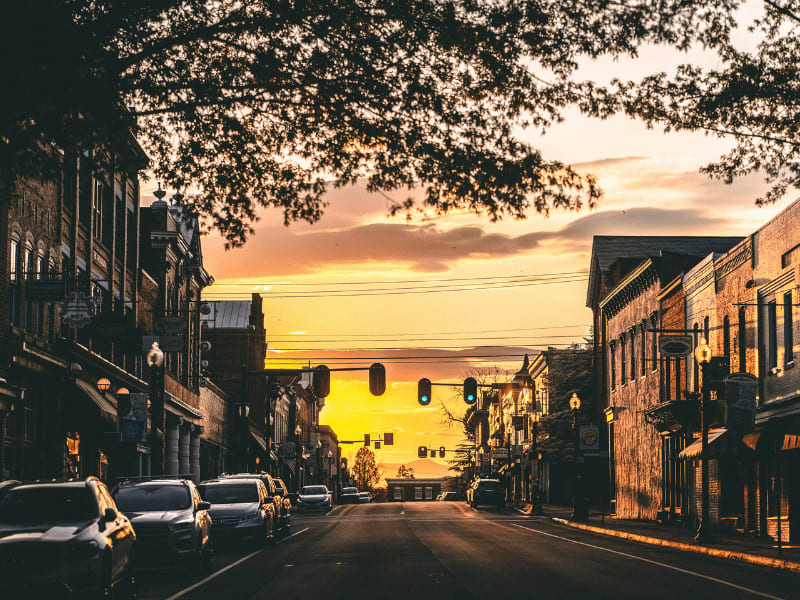
Culpeper County: More Competition Makes Pricing Important
Culpeper County’s median sale price was approximately $500,326 during the three months ending August 2026, essentially flat compared with the previous year.
Median market time increased from approximately 44 days a year earlier to around 62 days.
That longer marketing period is important for Culpeper sellers.
It does not mean desirable properties cannot sell quickly. It means sellers should not automatically assume the pricing strategies that worked during more aggressive market conditions will work exactly the same way today.
For country homes, the marketing should make acreage and setting understandable immediately.
Usable pasture, mountain or pastoral views, fencing, outbuildings, internet availability, driveway condition, recent mechanical improvements, and access to major transportation routes should be documented instead of being left for buyers to discover during a showing.
Professional valuation becomes particularly important when the property falls outside a conventional subdivision. A home valuation should examine the characteristics that actually influence the property's market position rather than relying only on square footage and bedroom count.
Fauquier County and Warrenton: Strong Values, More Deliberate Buyers
Fauquier County remained one of the higher-priced markets in the region during 2026.
The median sale price was approximately $690,688, up about 7.1% year over year, while median market time increased to approximately 43 days.
For Warrenton-area sellers, those numbers reinforce an important point:
Strong prices do not eliminate the need for careful positioning.
Horse farms and acreage estates should not be marketed as oversized conventional houses.
Barn configuration, stall count, fencing type and condition, pasture layout, arena dimensions, trailer access, water availability, equipment storage, easements, zoning, and the functional relationship between the residence and equestrian improvements can all influence how qualified purchasers evaluate a property.
The strategy for selling a horse farm in Fauquier County should therefore address the entire property as an operating lifestyle asset rather than focusing only on the residence.
The same principle applies when selling a home in Warrenton. Location, property condition, presentation, surrounding land use, outdoor improvements, and the competitive price range all contribute to how the property should be positioned.
Photography should tell that story clearly.
Exterior photography, aerial imagery, pasture views, barn interiors, fencing, entrances, and property layout matter because rural buyers are evaluating much more than bedrooms, bathrooms, and finished square footage.
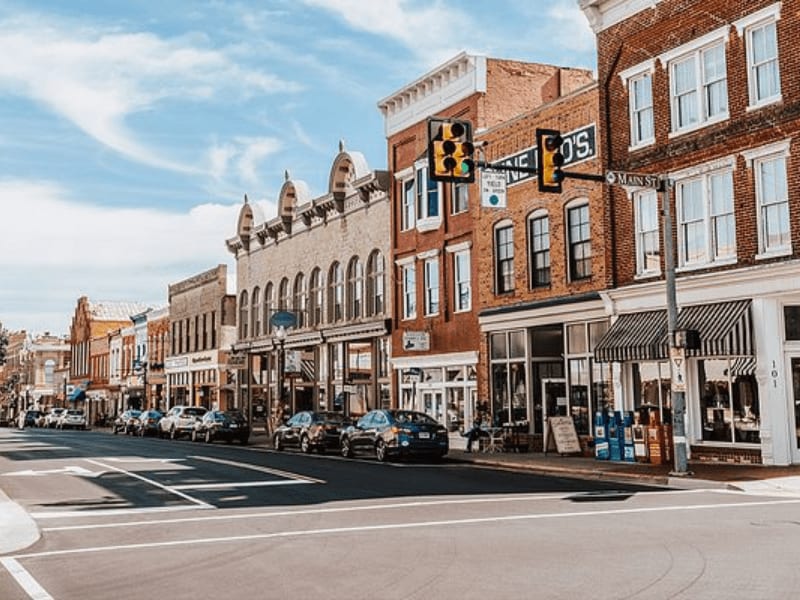
Gainesville and Western Prince William County: Do Not Rely on the Old “Instant Sale” Assumption
The Gainesville market remains active, but 2026 numbers show why sellers should not assume every well-located property will sell immediately.
During the three months ending August 2026, Gainesville’s median sale price was approximately $732,016, while homes sold in roughly 31 days.
The reported median was lower than the same period in 2025, illustrating how quickly the composition of sales can change from one period to another.
For Gainesville sellers, preparation before launch becomes particularly important.
Pricing, photography, repairs, staging, disclosure documents, showing instructions, and marketing materials should be ready before the property becomes active.
A listing usually receives some of its strongest attention when it is new. Using those first weeks to correct preventable problems can waste an important marketing advantage.
Transportation claims should also be precise. Gainesville itself does not have a Virginia Railway Express station. The western end of the VRE Manassas Line is at Broad Run in Bristow, so proximity to commuter transportation should be described accurately rather than overstated.
Orange County and Locust Grove: Sell the Specific Property, Not Just the Price Point
Orange County’s median sale price was approximately $437,137 during the three months ending August 2026, up around 4.1% year over year.
Median market time increased to approximately 84 days.
For sellers, longer market times make presentation and differentiation particularly important.
A rural Orange County property should emphasize usable acreage, privacy, views, outdoor improvements, recent repairs, broadband availability where applicable, and the practical condition of wells, septic systems, driveways, roofs, HVAC equipment, fencing, and outbuildings.
Locust Grove requires a somewhat different approach because properties within Lake of the Woods may derive part of their appeal from lake access, community amenities, recreation, golf, security, and neighborhood setting.
The key is not to market every Orange County property using the same generic “country lifestyle” language.
The listing should explain precisely what makes that particular property different from the alternatives buyers are considering.
Madison County: Rural Property Data Requires Context
Madison County reported a median sale price of roughly $503,316 during the three months ending August 2026, with a reported year-over-year increase of approximately 24.3%.
Homes sold in approximately 57 days.
That percentage increase should not be interpreted as meaning every Madison County property appreciated by 24%.
Madison is a comparatively small housing market, and a limited number of transactions can influence the median substantially.
Rural properties also vary enormously in acreage, elevation, mountain views, improvements, accessibility, land utility, property condition, and proximity to local destinations.
For Madison sellers, property-specific comparable analysis is considerably more useful than a county headline.
Mountain views, open acreage, privacy, gardens, established landscaping, outbuildings, renovated historic features, usable pasture, and natural light should be documented carefully.
Photography should also be planned around the property rather than treated as a routine interior photo session. A rural property’s setting is often part of what creates its value.
Fredericksburg: A Different Seller Market Within the Region
Fredericksburg provides an important contrast to the more rural portions of Greater Piedmont Virginia.
The city’s median sale price was approximately $479,683 during the three months ending August 2026, up roughly 9% from the same period in 2025.
Median market time increased to approximately 49 days.
For owners on the rural edges of the Fredericksburg market, marketing may need to balance land, privacy, and lifestyle benefits with accessibility and proximity to employment centers.
That is different from marketing a Madison County mountain retreat or a Fauquier County horse farm.
Greater Piedmont Virginia is not one uniform housing market, and seller strategy should change with the property.
How Should a Rural or Horse Property Be Priced in 2026?
There is no universal percentage that should be used when pricing a rural property.
The idea that every seller should automatically list 10% or 15% below the top of the comparable range is too broad, especially for country properties where individual sales may differ substantially.
Instead, the asking price should be built around the most defensible competitive range.
For rural and equestrian properties, I evaluate the residence and the land separately before bringing them together as one marketable asset.
That analysis may include:
Acreage and usable land
Pasture quality
Barns and outbuildings
Fencing
Arenas and equestrian infrastructure
Mountain or pastoral views
Road and driveway access
Easements
Well and septic systems
Property condition
Recent improvements
Competing listings
Pending transactions
Relevant closed sales
Likely appraisal considerations
A thorough Comparative Market Analysis should explain why a pricing range makes sense rather than simply producing a number.
That is the difference between picking a price and creating a pricing strategy.
Documentation Can Protect Seller Negotiating Power
Rural transactions frequently involve questions that suburban sellers may not encounter.
Before listing, sellers should gather available documentation for major improvements, roof and HVAC work, well records, septic records, surveys, easements, conservation restrictions where applicable, barn improvements, fencing, generators, additions, and other significant property systems.
Clear documentation can reduce uncertainty after an offer is received.
Virginia also updated its Residential Property Disclosure Statement effective July 1, 2026. The current Virginia residential property disclosure requirements should be reviewed when preparing a property for sale.
Disclosure requirements can vary depending on the property and transaction. Sellers with legal questions should consult a qualified Virginia attorney.
Think About Net Proceeds, Not Just the Highest Offer
The offer price is only one part of a seller’s result.
Financing, appraisal exposure, inspection provisions, requested credits, settlement date, contingencies, personal property, repair requests, and other contract terms can materially affect the final outcome.
This is where experienced contract negotiation matters.
The Real Estate Store has maintained its seller-focused model since 2015. My role is to evaluate an offer from the property owner’s side of the transaction and help the seller understand both the price and the contractual risk before making a decision.
A higher-priced offer with weak financing, substantial contingencies, or aggressive repair provisions is not automatically stronger than another offer with different terms.
The contract needs to be considered as a whole.
Tax Considerations for Virginia Home Sellers
Tax issues should be discussed carefully because the answer depends on the seller's individual circumstances.
Under current federal rules, qualifying homeowners may exclude up to $250,000 of gain, or up to $500,000 for many married couples filing jointly, when selling a primary residence if the applicable ownership and use requirements are satisfied.
The IRS rules for the sale of a residence generally require the homeowner to have owned and used the property as a principal residence for at least two of the five years preceding the sale, although exceptions and additional rules can apply.
Farms, rental use, business use, conservation arrangements, inherited property, and investment property can create different tax considerations.
Sellers should consult a CPA, tax professional, or attorney before making decisions based on potential tax treatment.
Frequently Asked Questions for Greater Piedmont Virginia Sellers
Is Greater Piedmont Virginia still a seller’s market in 2026?
Conditions vary by county, price range, property condition, and property type.
Virginia still has constrained housing supply by longer-term standards, but inventory increased materially during 2026 and market times lengthened in several Greater Piedmont communities.
The 2026 Virginia housing market increasingly rewards properties that are priced and presented correctly rather than simply rewarding every home that enters the market.
What is the average home price in Greater Piedmont Virginia?
There is no single Greater Piedmont average that adequately represents the region.
Recent county and community medians range from approximately the mid-$400,000s in Orange County to the upper-$600,000s in Fauquier County, while Gainesville has recently recorded a median above $700,000.
Rural estates, horse farms, large-acreage properties, historic homes, and luxury country properties can fall substantially outside those figures.
How long should I expect my property to take to sell?
That depends heavily on location, price, condition, acreage, and property type.
Recent local market times range from roughly a month in Gainesville to considerably longer periods in markets such as Orange County.
Specialty acreage and equestrian properties may also require a different marketing window because the pool of qualified buyers is narrower.
Should I renovate before selling a rural property?
Not automatically.
Repairs that remove obvious buyer objections are often more valuable than expensive cosmetic remodeling.
The right improvement plan should consider the property's current condition, likely buyer expectations, competing listings, and the probable return on the investment.
For some properties, fresh paint, maintenance, landscaping, improved lighting, barn cleanup, fence repair, driveway maintenance, and professional photography may produce more value than a major renovation.
How do I determine what my rural property is worth?
Start with comparable properties that share the characteristics that actually create value.
For a country home or horse farm, those characteristics may include acreage, usable pasture, barns, fencing, views, water systems, outbuildings, zoning, easements, location, condition, and recent specialty-property sales.
A professional home valuation should account for those differences rather than depending solely on an automated estimate.
Selling in Greater Piedmont Virginia in 2026
The strongest seller opportunity in 2026 is not simply “low inventory.”
The opportunity comes from understanding a more selective market and positioning your property better than the competition.
Virginia home values remain strong overall, but inventory has increased and market time has lengthened in several Greater Piedmont communities.
That makes strategy more important, not less.
If you own a rural home, country property, acreage estate, or horse farm in Culpeper, Warrenton, Gainesville, Madison, Orange, Locust Grove, Fredericksburg, or the surrounding Greater Piedmont region, the first step should be understanding where your property actually fits within today's market.
A property-specific home valuation can establish the starting point, while a detailed Comparative Market Analysis can identify the pricing, positioning, and competitive factors most likely to influence your sale.
I’m Karen M. Souder, Owner and Principal Broker of The Real Estate Store, where my focus is exclusively on representing property sellers.
Karen M. Souder, PSA, CDPE, CPM
Owner / Principal Broker
The Real Estate Store
(703) 994-6497
karen@kmsouder.com
Offices in Culpeper and Warrenton, Virginia.